 Bedroom
 Coffee Tables
 Dining Tables
 Garden Decor
 Living Room
 Painting Art
 Wall Art


For most outdoor furniture, the cleaner you need is already under your kitchen sink: mild dish soap, warm water, a soft brush, and a garden hose.
What changes from piece to piece is what the material can’t handle. Teak, aluminum, wrought iron, and resin wicker each have one or two things that will damage them faster than a winter outside ever could, and the pressure washer tops almost every list.
The Mistake I Made With the Pressure Washer
The first spring I owned a teak bench, I rented a pressure washer for the deck and figured the bench could get a quick blast too. It came out clean, sort of. It also came out fuzzy. The spray had lifted the soft grain between the harder growth rings, and the seat felt like a cat’s tongue for the rest of the summer. I sanded it smooth eventually, but I lost a whole weekend doing it.
It turns out that’s a well-known problem. High-pressure spray can splinter wood, strip paint from metal, and leave permanent marks on plastic. I still use the pressure washer on the deck. The furniture gets a bucket and a brush now.
Start With Soap, a Soft Brush, and a Hose
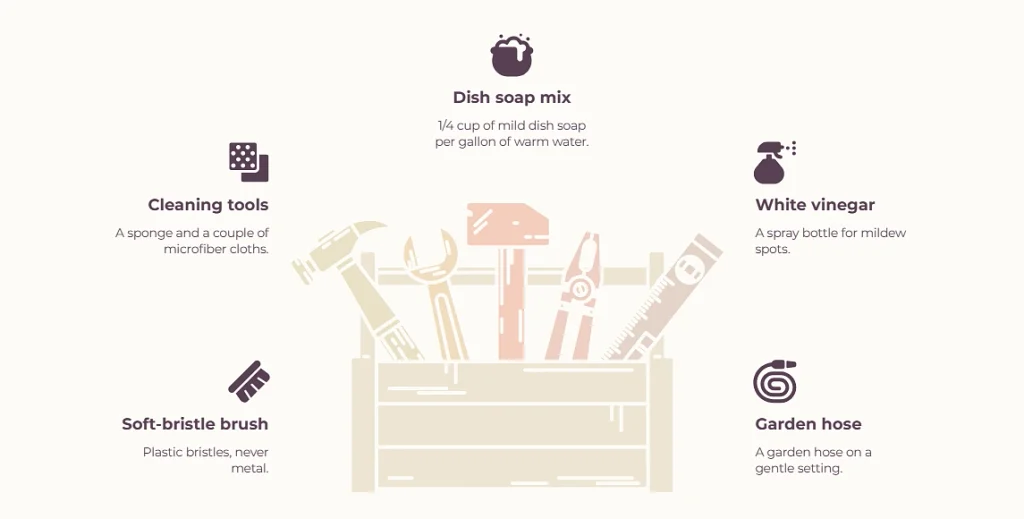
A good all-purpose mix is 1/4 cup of mild dish soap per gallon of warm water. That handles regular dirt, pollen, and bird mess on most materials.
What I keep in one bucket for the whole patio:
- a soft-bristle brush (plastic bristles, never metal).
- a sponge and a couple of microfiber cloths.
- the dish soap mix above.
- a spray bottle of white vinegar for mildew spots.
- a garden hose on a gentle setting.
Work top to bottom, rinse well, and let everything dry completely before putting cushions back on. That last part matters more than it sounds, since trapped moisture is how mildew gets started in the first place.
What Each Material Can Handle
Before scrubbing anything, it’s worth checking the maker’s care guide if you still have it, because some warranties spell out which cleaners are allowed. When you don’t have it, this is the breakdown I go by.
| Material | What to clean with | What to avoid |
|---|---|---|
| Teak | Mild soap, soft plastic brush, a cup of vinegar for mildew | Bleach, steel wool, metal brushes, pressure washers |
| Aluminum | Mild soap and water; equal parts vinegar and water for chalky oxidation | Harsh or abrasive cleaners, scouring pads |
| Wrought iron | Mild soap and water, towel dry, then car wax | Leaving it wet, pressure washers |
| Resin wicker | Warm soapy water, soft brush, gentle hose rinse | High-pressure spray, soaking the weave |
| Plastic / resin | Soap and water; vinegar and water for mildew | Bleach on colored pieces |
| Cushions | Mild soap, per the care tag | Putting them back on damp frames |
Teak Needs the Gentlest Hands
Teak makers are blunt about this one never use bleach, a brass brush, a pressure washer, or steel wool on teak. For mildew, add one cup of white vinegar to your soapy water. Keep in mind that gray teak isn’t dirty teak. Untreated teak turns silver outside no matter how often you clean it, and washing won’t bring back the honey color. That takes a teak cleaner and brightener, which is a separate project.
Metal Frames
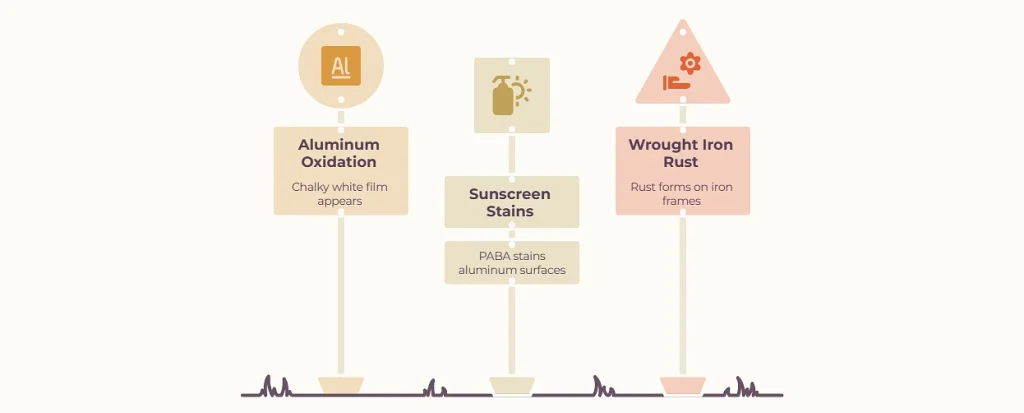
On aluminum, a chalky white film means oxidation. A 50/50 mix of white vinegar and water, or a metal polishing paste, takes care of it. One odd thing I learned the hard way: some sunscreens containing PABA can stain aluminum. Sunscreen hands on the armrests leave marks.
For wrought iron, wash with mild soap and water, then protect it with a coat of automotive spray wax. Doing that once or twice a year keeps rust from getting a foothold. Dry it with a towel instead of letting it air dry in a puddle.
Mildew, Rust, and Other Stubborn Stuff
Soap handles the weekly dirt. The problems that actually ruin furniture take a bit more.
| Problem | What worked | Where to use it |
|---|---|---|
| Mildew spots | Equal parts white vinegar and water, scrub, rinse | Teak, resin, plastic, wicker |
| Chalky film on metal | 50/50 vinegar and water, or metal polish | Aluminum |
| Rust spots | Wire brush on the spot only, then rust-inhibiting primer and paint | Wrought iron, steel |
| Stubborn stains on white plastic | Diluted CFA outdoor bleach, rinsed well | White resin only |
| Grease or food drips | Dish soap right away, before it sets | Any material |
On bleach, one caution matters more than any cleaning tip here. Bleach is only safe on white resin, and one guide suggests one part outdoor bleach to two parts water. On colored resin, it can shift the color unevenly. Also, never mix bleach with vinegar or ammonia. Together they release toxic gas, so rinse between products if you’ve used more than one.
Cushions and Fabric
Check the care tag first, since outdoor fabrics vary a lot. Some removable covers can go through a gentle wash cycle, and others should only be hand-washed. For most cushions, I scrub with the same soap mix, rinse with the hose, and stand them on their edges in the sun so the water drains out of the foam.
That last step is the one people skip. A cushion that feels dry on the outside can stay damp inside for a day or two, and that’s where the musty smell comes from. I’d rather leave them out an extra afternoon than smell that all summer.
Most of this is less about cleaning and more about not doing damage. A bucket, a soft brush, and patience will do more for patio furniture than any spray-on product with a big claim on the label, and the pressure washer can stay on the deck where it belongs.