 Bedroom
 Coffee Tables
 Dining Tables
 Garden Decor
 Living Room
 Painting Art
 Wall Art



Three inches. That’s how much bare wall and baseboard showed under my brand-new living room curtains the first time I hung them.
I’d mounted the rod close to the ceiling because every styling photo I’d saved did it that way. The panels were 84 inches long. The math was never going to work, and I only did it after the drill was put away.
The good news is you don’t have to pick between a high rod and curtains that reach the floor. You have a few fixes, and most cost less than new panels.
First, Measure What You Have
Before moving anything, measure from the floor up to the top of the rod, not to the bracket or the ceiling. Then compare that number with the panel length printed on the package.
If the gap is under 2 inches, you can probably fix it without touching the rod. If it’s 4 inches or more, the rod is likely coming down a little, or the panels are going back to the store. My gap was 3 inches, which of course sat right in the annoying middle.
One detail that caught me out: how the panel hangs changes its length. With grommet panels, the rod runs through holes near the top, so a bit of fabric sits above the rod. That fabric counts toward the 84 inches but does nothing to help you reach the floor. Mine lost about an inch and a half that way.
Clip Rings Buy You Back an Inch or Two
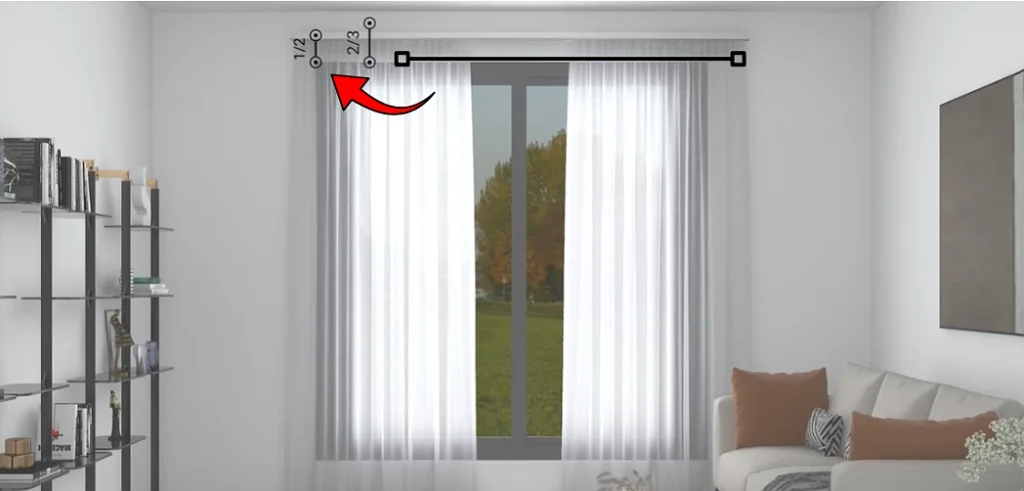
This is the fix I tried first, and it got me most of the way.
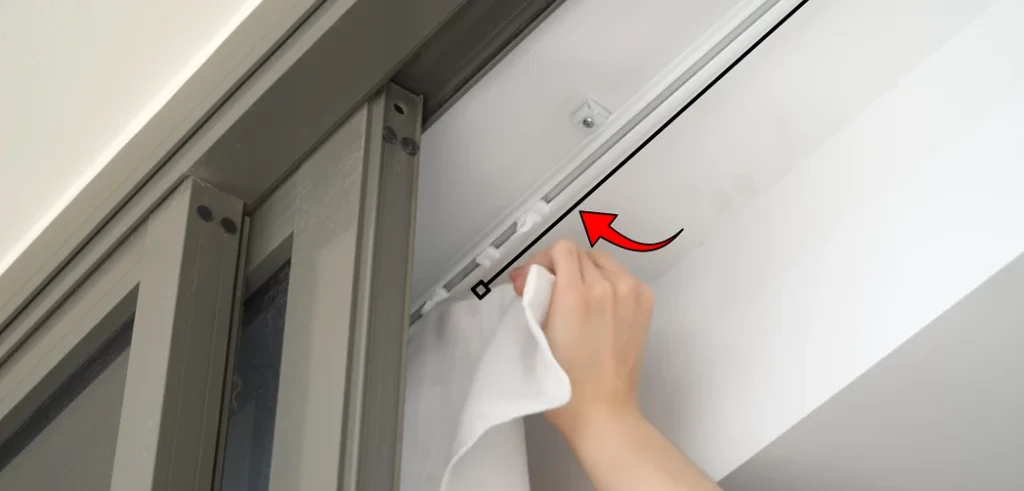
Rings with small clips hang below the rod, and the curtain hangs below the rings. Depending on the ring size, that adds roughly 1 to 2 inches of drop compared with a rod pocket or grommet. It also slides more smoothly, which I didn’t expect to care about and now can’t live without.
If your panels have grommets, you can still clip the rings to the fabric just below the top edge. It looks fine from the room. From up close, you can see the unused grommet holes, but nobody stands that close to a curtain unless they’re a cat.
Letting Down the Hem
I checked the bottom of my panels and found a 4-inch hem folded under. Most store-bought curtains have a deep hem like this, partly so they hang straight.
I unpicked it with a seam ripper one evening in front of the TV, pressed it flat, and re-hemmed with iron-on hem tape at 1 inch. That gave back almost 3 inches. The old fold line showed at first, a faint crease across the bottom, but a steamer and a week of hanging mostly sorted it out. On one panel, you can still see it in low afternoon light. I’ve decided that’s character.
A couple of warnings:
- Wash or steam the fabric first if it’s cotton or linen, since some shrinkage is better found now than after re-hemming.
- blackout lining doesn’t always hem the same way as the front fabric, so check both layers.
- a thin hem makes lightweight sheers float a bit instead of hanging straight.
Or Lower the Rod Slightly
This felt like giving up, and it isn’t. A rod about 4 to 6 inches above the window frame still makes the window look taller. It doesn’t have to kiss the ceiling.
Figure out the new height by working backward. Take the panel length, add whatever the rings add, and aim for the fabric to just touch the floor or sit about half an inch above it. Mark that height lightly in pencil, then hold one panel up against the wall before drilling anything. I skipped that step the first time, which is how I ended up here in the first place.
Yes, you’ll have holes to fill from the old brackets. A little spackle and a dab of paint, and they disappear.
Adding Fabric When Nothing Else Is Enough
If you’re short by 5 inches or more, you can sew or fuse a band of fabric to the bottom. A contrasting color can look intentional, like a border, especially on plain linen panels. A friend of mine did a deep charcoal band on oatmeal curtains, and people still ask where she bought them.
Adding the band at the top works too, where the rod or rings partly hide the seam.
Getting the Rest of the Curtain Hanging Right
Length is only half of hanging curtains well. A few things I learned while redoing mine:
- Extend the rod 3 to 10 inches past the window frame on each side, so open curtains sit on the wall instead of covering glass.
- Panels look full when their total width is about twice the window width. One skinny panel per side looks stretched.
- Use a center support bracket on wide windows, or the rod will sag in the middle within a month.
Next time, I’ll buy 95-inch panels and hem them up. It’s easier to take length away than to find it. I still like the 84s I ended up with, though, clip rings and faint crease line and all.