 Bedroom
 Coffee Tables
 Dining Tables
 Garden Decor
 Living Room
 Painting Art
 Wall Art


Rent to own homes near me, you almost never come labeled that way. Most are regular houses whose owners might agree to a lease-option if someone asks, or landlords who’d rather sell to a tenant they already trust.
I found that out after a week of searching the phrase and getting mostly ads, a few expired listings, and one yard sign with a phone number that went to voicemail every time.
So the finding part takes legwork. The checking part matters even more, because the money you pay upfront usually doesn’t come back if the deal falls through.
What I Wish Someone Had Explained First
A rent-to-own deal is two contracts stapled together. One is a normal lease covering rent, repairs, and house rules. The other is an option or purchase contract that sets the future price, the option fee, how much of your rent gets credited, and the date you have to decide by.
The money pieces look like this:
- Option fee: paid upfront for the right to buy. It’s usually nonrefundable, and it commonly runs somewhere between 1% and 7% of the purchase price. If you buy, it normally counts toward your down payment.
- Rent credits: a slice of each month’s rent set aside toward the purchase. They only count if the contract says so and the payments are documented.
- Rent that’s higher than usual. Expect to pay more than similar own homes rent for, since that extra is where the credits come from.
- Lease length: usually one to three years, occasionally up to five.
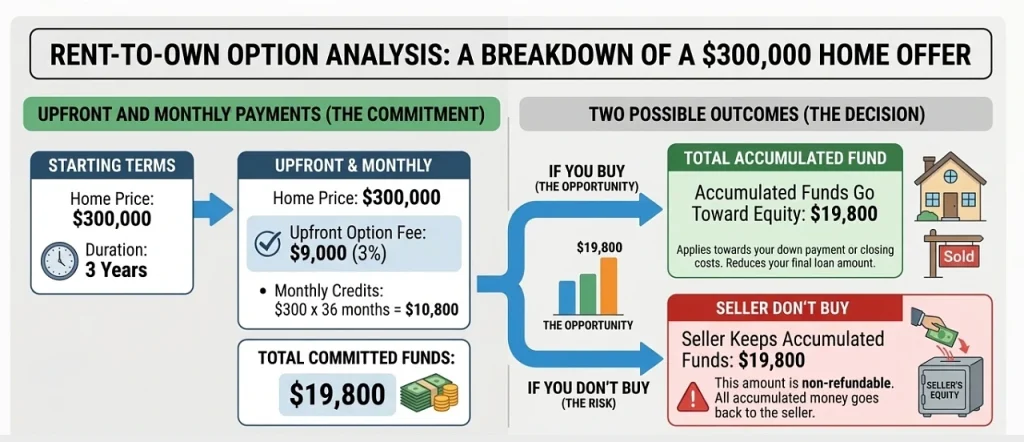
I ran the numbers on one house I looked at, rounded off to keep it simple. On a $300,000 home, a 3% option fee is $9,000. Add $300 a month in credits over three years, and that’s another $10,800. If you buy, about $19,800 goes toward the house. If you don’t, the seller usually keeps all of it. Seeing that second number written down changed how carefully I read everything after.
Lease-Option vs. Lease-Purchase
I almost skimmed past this, and it’s the most important line in the whole contract.
A lease-option gives you the right to buy, but you don’t have to. If a lender says no when the lease ends, you can walk away, though you’ll most likely lose the option fee and credits.
A lease-purchase is different. You’re legally required to buy, so a denied mortgage could leave you in breach of contract.
If your credit is still a work in progress, the lease-option is the safer of the two.Watch for “Contract for Deed”
Some deals sold as rent-to-own are actually contracts for deed, also called land contracts. You make payments, but the seller keeps the title until everything is paid off, which can take decades. In 2024, the Consumer Financial Protection Bureau said existing consumer protections apply to these loans and warned people nationwide about the risks. The complaints it described included buyers who were misled about whether they owned the home and people evicted over a single missed payment.
If you see “land contract” or “installment contract” anywhere in the paperwork, read it as a loan, not a lease.
Where I’d Look Locally
There’s no single list of every rent-to-own home in a town. The better leads came from places I didn’t expect:
- your own landlord, if you like where you live. Some owners would honestly rather sell to a tenant than deal with agents and showings.
- houses that have sat unsold for months, since those sellers tend to be more open to a lease-option
- for-sale-by-owner signs in neighborhoods you’d actually want to live in
- a local real estate agent. Some know sellers who’d consider it, even if it’s not advertised.
- listing searches with words like “lease option” or “owner will consider rent to own”
There are also companies that run rent-to-own programs in certain areas. Their terms vary, and some have their own minimum credit scores and fee structures, so read their contracts as carefully as you’d read a stranger’s.
The Check That Saved Me From a Bad One
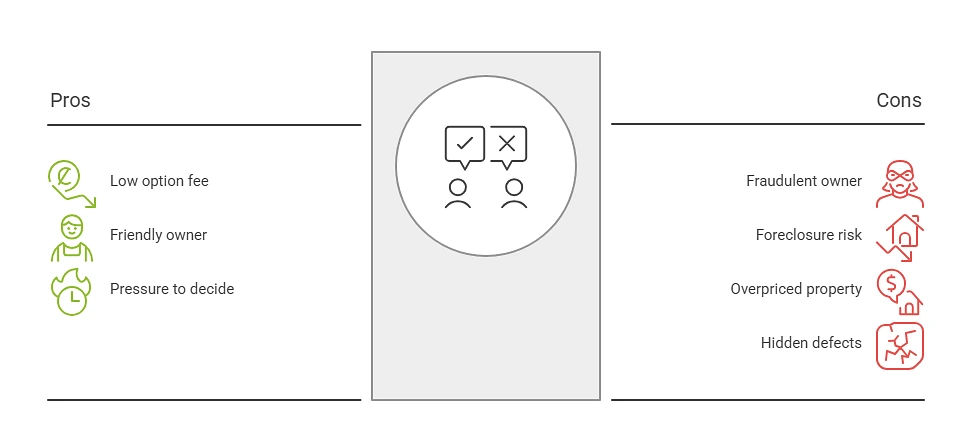
A house I liked came with a friendly “owner,” a low option fee, and a lot of pressure to decide that weekend. Before sending anything, I looked up the address in the county property records. The name on the title wasn’t his.
That turned out to be a well-known setup. Someone advertises a home they’re only renting, or don’t own at all, collects the option fee and first month’s rent, and vanishes. The Federal Trade Commission lists a seller who doesn’t actually own the property as one of the main problems with these deals.
Before paying anyone, I’d do this every time:
- Match the owner’s name against your county recorder or assessor records.
- ask if there’s a mortgage on the house and whether it’s current, since a foreclosure can end your deal.
- compare recent nearby sales, or pay for an appraisal, to see if the locked-in price makes sense.
- get a home inspection, exactly like a normal purchase.
Have Someone on Your Side Read It
Sellers write these contracts, and small wording decides who carries the risk. One Indiana fair housing group recommends talking with a real estate professional, a legal services organization, or a housing counseling agency before signing any rent-to-own or land contract.
HUD-approved housing counseling agencies can help you sort out your finances and your mortgage options, often at no cost. For an option fee in the thousands, I’d also pay a real estate attorney for an hour. It’s cheap next to what’s at stake.
Rent-to-own does work for some people, mostly those a year or two away from qualifying for a mortgage with a real plan to get there. For everyone else, the option fee tends to become an expensive way to rent. If the contract doesn’t make your path to owning the house clear, keep looking.
2 thoughts on “Rent to Own Homes Near Me: How to Find One Locally and Check the Deal Before You Pay”