 Bedroom
 Coffee Tables
 Dining Tables
 Garden Decor
 Living Room
 Painting Art
 Wall Art

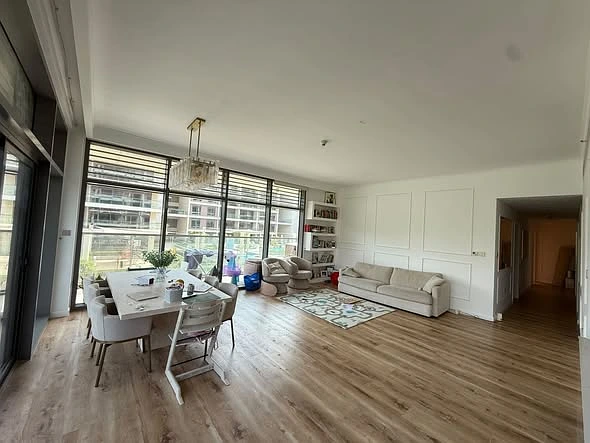
A reader posted photos of her living room asking for ideas. She can replace the sofa but wants to keep the rest, there’s no television planned, and the priority is keeping the floor open for her children to play.
The room has a great deal going for it. Floor-to-ceiling windows down one side, applied panel moulding on the main wall, built-in shelving, and generous proportions. What it doesn’t have is a reason for the furniture to be where it is, and that’s the thing worth fixing first.
Without A TV, Nothing Is Telling The Furniture Where To Sit
This is the actual problem in those photos, and it’s easy to miss because nothing looks obviously wrong.
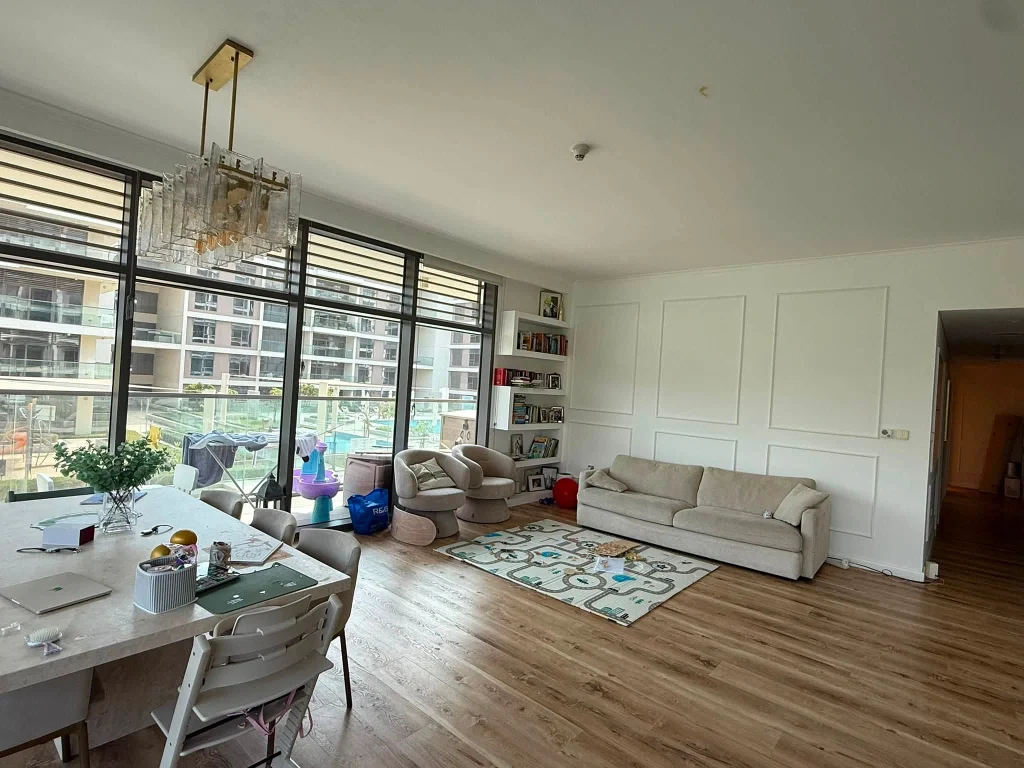
Most living rooms are organised around a television whether anyone admits it or not. Remove it and the seating loses its reference point. In her photos the sofa sits flat against the panelled wall facing an empty middle, and the two armchairs float near the window without any clear relationship to it. Nothing is pointing at anything.
A room without a focal point reads as unfinished even when every piece in it is nice. So the first decision isn’t which sofa to buy, it’s what the seating is going to face.
The Options That Actually Exist Here
- The windows. She has full-height glazing along an entire wall, which is the strongest feature in the room. Turning the seating to face it makes the view the focal point, and it’s free.
- The panelled wall. Applied moulding is already an architectural feature. A large piece of wall art centred within those panels gives the sofa something to sit beneath and the chairs something to face.
- The built-in shelving. Styled deliberately rather than filled, it becomes a feature wall on its own.
- Each other. A conversation grouping, with seating facing inward around a low table, is how living rooms were arranged before televisions existed, and it suits a family with young children better than most people expect.
The Rug Is A Play Mat, Not A Rug
There’s a small road-map rug in front of the sofa. It’s doing a job for the kids, which is fine, but it isn’t doing the job a rug does in a room.
It touches no furniture. Nothing sits on it. A rug that anchors nothing makes a large room feel emptier rather than fuller, because the eye reads a small island of pattern floating in a sea of floorboards.
What the room needs underneath the seating group:
- A rug large enough that the front legs of the sofa and both armchairs land on ity.
- In a room this size, that means 8×10 at minimum, more likely 9×12.
- The play mat can layer on top of it, which children generally prefer anyway.
There’s a fuller explanation of why the too-small rug undermines a room if the reasoning is useful, but the short version is that the rug is what draws the boundary of the living zone in an open-plan space. Without it, there is no zone, just furniture standing on a floor.
Pull The Sofa Off The Wall
This one sounds wrong and is worth trying anyway.
Pushing every piece of furniture against the walls does not make a room feel larger. It makes the middle feel like a corridor and the edges feel like a waiting area. Floating the sofa even six to ten inches off the wall reads as deliberate, and in a room with this much floor there’s no cost to doing it.
In an open-plan space it does something more useful still. Once the seating group is pulled together onto a rug, with the sofa and chairs relating to each other, the room divides itself into a living zone and genuinely open floor beyond it. That’s more usable play space than she has now, not less, because the current arrangement leaves the middle ambiguous.
Choosing The Replacement Sofa
Since the sofa is the piece she’s willing to change, a few things matter more than others here.
- Low back. With no TV and full-height windows, sightlines are the asset. A tall-backed sofa cuts the room in half visually.
- Legs rather than a skirt. Visible floor beneath furniture reads as space, and it makes retrieving toys considerably easier.
- Performance fabric or removable covers. Not a style question with small children in the house.
- A chaise or corner section if she wants more lounging surface without adding another separate piece to the floor.
The existing armchairs are cream and rounded, so keeping the sofa in the same family of tone and shape will hold the room together. If she wants contrast, it’s better placed in the coffee table or the rug than in a fourth upholstery colour.
Open For Kids Means Defined, Not Empty
The instinct with children is to clear the floor entirely. It usually backfires.
An undefined room gets used less predictably. Toys spread to wherever there’s space, which is everywhere, and there’s no natural line between the adult area and the play area. A properly anchored seating group creates that line without a single wall, and the space beyond it becomes clearly theirs.
Two practical additions worth considering:
- A storage ottoman as the coffee table. Soft corners, holds toys, doubles as extra seating when people visit.
- Closed baskets on the lower shelves of the built-in, so tidying at the end of the day is a single movement rather than a sorting exercise.
While The Shelving Is In A Room Where Children Play
Worth raising because it’s visible in the photos and it’s genuinely serious.
Tall furniture and shelving units tip over, and the injuries involve children more than any other group. The US Consumer Product Safety Commission runs an entire campaign on this, and their Anchor It guidance covers how to secure furniture to a wall properly.
If that unit is a genuine built-in, fixed to the structure, it’s likely fine. If it’s a freestanding bookcase placed against the wall, it wants anchoring, along with anything else in the room a child could climb. It takes ten minutes and a bracket.
Where I’d Start
If it were my room, in this order:
- Decide what the seating faces. The window is the obvious answer given what’s already there
- Buy the large rug and position the existing armchairs onto it, angled toward whatever was chosen in step one
- Pull the sofa off the wall onto the rug’s edge
- Then buy the replacement sofa, once the layout exists and the dimensions are known
Buying the sofa first is the tempting order and the expensive one, because the right sofa depends entirely on where it’s going and what it’s facing. The layout should exist before the furniture does. The rest of the pieces the room needs will be much easier to judge once those four decisions are made.